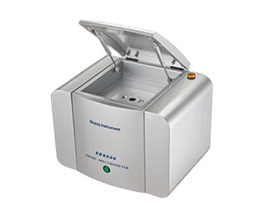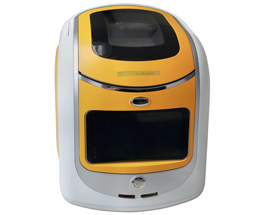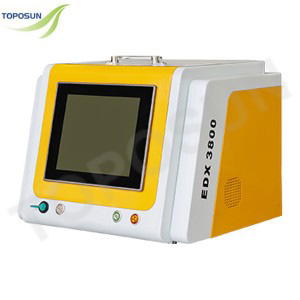

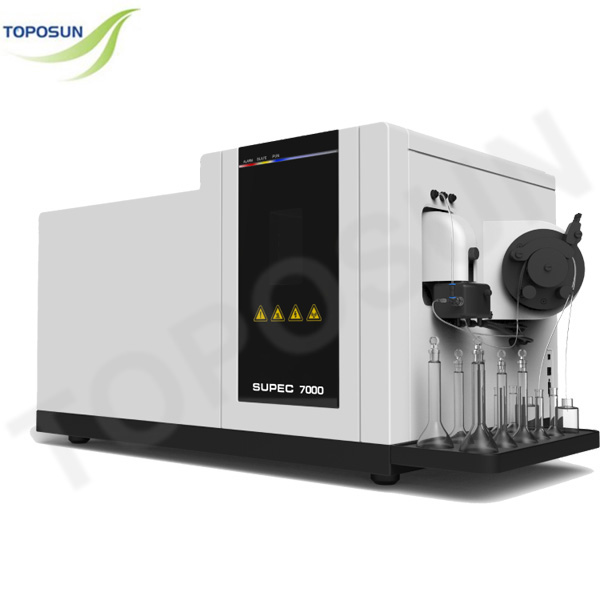
TPS-SUPEC-7000 Inductively Coupled Plasma Mass Spectrometer
Product Overview
TOPOSUN SUPEC-7000 inductively coupled plasma mass spectrometer offers high sensitivity and reliability.
The TPS-SUPEC-7000 ICP-MS was developed following the resolution of core technical challenges in mass spectrometry, including the control of high-temperature gases, the utilization of multistage gradient vacuums, the integration of high-sensitivity ion interfaces, the incorporation of distributed collision reaction cells, and the incorporation of a quadrupole mass analyzer with temperature and humidity resistance.
It can be combined with a liquid chromatography system, an online gas dilution system, automatic rapid injection, oxy-combustion, laser ablation, direct injection in atmosphere, organic injection, and other specialized technologies, and is suitable for a variety of professional applications. Element V, a professional mass spectrometer software system equipped with a standard methodology library, automatic tuning, guided operation mode and visualised status monitoring at any time, greatly simplifies the operation of the mass spectrometer software system, while meeting the extensive needs of laboratory applications.
TPS-SUPEC-7000 Inductively Coupled Plasma Mass Spectrometer Technical Specifications
Versatile Applications Across Industries
Elemental speciation analysis
Organic mercury detection
LC has excellent separation ability, and ICP-MS has the advantages of high sensitivity and low detection limit. Therefore, the combination of the two has become the mainstream method for organic mercury detection.
Arsenic speciation analysis
In the determination of total arsenic and inorganic arsenic in food, the inorganic arsenic in food is extracted by dilute nitric acid, and the target compound separated by LC is determined in TPS-SUPEC-7000.
Chromium valence analysis
There are two main forms of chromium, Cr(III) and Cr(VI). SUPEC-7000 is combined with liquid chromatography and anion exchange chromatography column to analyze chromium valence in environmental water.
Soil
According to the limit requirements of various heavy metals in soil specified in EPA 3050B and EPA 3051B, TPS-SUPEC-7000 is used to determine the content of metal elements in standard soil samples. The matrix effect of soil samples is eliminated using bismuth, indium and antimony internal standard elements. Interference correction equations and collision reaction cell technology are adopted to eliminate isobaric interference.
Geology
Rare earth element analysis has always been an important field of chemical analysis. Accurate determination of rare earth element contents and the interrelationship between elements are of great significance for determining rock sedimentary environments and exploring rare earth deposits. Inductively coupled plasma mass spectrometry (ICP-MS) is widely used in the detection of trace elements in geological samples, mineral products and water sediments due to its high sensitivity and low detection limit.
Water and Waste
EPA Method 200.8: “Determination of Trace Elements in Waters and Wastes by Inductively Coupled Plasma Mass Spectrometry” covers ultra-trace amounts of barium, cadmium, chromium, mercury, strontium, etc. Measurement of these elements requires the instrument to have excellent sensitivity. The SUPEC-7000 can perform accurate multi-element measurement in the laboratory, and can be vehicle-mounted to emergency sites to complete the analysis of the above elements.
Key Features of TPS-SUPEC-7000 Inductively Coupled Plasma Mass Spectrometer
Excellent sensitivity
With an innovative aerodynamic simulation design that optimizes the ion interface at the junction of thermal plasma and vacuum, the sensitivity of the ICP-MS is significantly improved by 3 to 5 times. This advancement allows for detection limits as low as parts per trillion (ppt), making it ideal for analyzing high-purity materials and reagents.
Outstanding Matrix Tolerance
The remarkable matrix tolerance of the TPS-SUPEC-7000 enables direct injection of high-salt samples up to 10%. This capability is achieved through thorough fluid simulations of ion interfaces, an innovative design with two front and rear off-axis configurations, patented collision reaction cells, a robust self-excited all-solid-state ICP ion source, argon online dilution, and other cutting-edge technologies.
Innovative Reliability-Oriented Design Enhancing Stability
The TPS-SUPEC-7000 stands out as the only ICP-MS device capable of on-board operation. Its exclusive design incorporates shock absorption and all-solid-state components to ensure optimal stability. Rigorous testing, including assessments of road load data under various road conditions during vehicle transportation, as well as extensive practical tests covering tens of thousands of kilometers, has validated its exceptional reliability.
Multiple Applications
ICP-MS serves as a rapid multi-element analysis technique widely used in industries requiring high sample throughput and multi-element measurement for each sample. Application fields include environmental monitoring (river water, drinking water, estuary and seawater, waste, soil and sediment digests, biological communities, etc.), routine food safety testing, pharmaceutical material analysis, and consumer product testing (toys, textiles, etc.). ICP-MS also finds broad applications in semiconductor and fine chemical manufacturing, life sciences, clinical research, geochemistry, mining, nuclear science, materials research, metrology and academia.